What Is Red Light Therapy and How Does It Work?
A modern approach to everyday wellness
Red light therapy has become an increasingly popular part of modern wellness and recovery routines—but what is it, and how does it work?
Also known as photobiomodulation, red light therapy uses carefully selected wavelengths of red and near-infrared light. Unlike ultraviolet light, these wavelengths do not tan the skin. Instead, they deliver low-level light energy that can interact with natural processes within the body's cells.
Non-invasive and easy to incorporate into everyday life, red light therapy is commonly used to support healthier-looking skin, muscle recovery, joint comfort and general wellbeing.
How does red light therapy work?
Every cell requires energy to function effectively. Much of this energy is produced by tiny structures called mitochondria, often described as the powerhouses of the cell.
When red and near-infrared light reaches the body, some of it is absorbed by light-sensitive molecules within the cells. Research suggests this may influence mitochondrial activity and cellular signalling—the way cells produce energy, respond to stress and communicate with surrounding tissue. This process is known as photobiomodulation.
Red and near-infrared light are often combined because they work at different depths. Red light is more readily absorbed near the skin's surface, making it particularly suited to skin-focused routines. Near-infrared light can travel deeper into the body's tissues, which is why it is commonly associated with muscles, joints and physical recovery.
What are the potential benefits?
Healthier-looking skin
Red light therapy is widely used as part of a non-invasive skincare routine. Studies suggest it may support processes associated with collagen and elastin—the proteins that help give skin its structure and resilience. With consistent use, it may help skin appear smoother and firmer while softening the visible appearance of fine lines.
Post-exercise recovery
Exercise places temporary stress on the muscles. Alongside rest, hydration and good nutrition, research suggests that photobiomodulation may support the body's natural recovery response and help reduce perceived muscle soreness after exercise.
Joint comfort and everyday movement
Near-infrared light is often used on areas such as the knees, shoulders and lower back because it can reach deeper than visible red light. Research has shown promising results for comfort and physical function in some joint-related settings, although individual results and the strength of evidence vary.
Red light therapy is best viewed as a supportive wellness tool rather than a replacement for professional medical advice or treatment.
What does a session feel like?
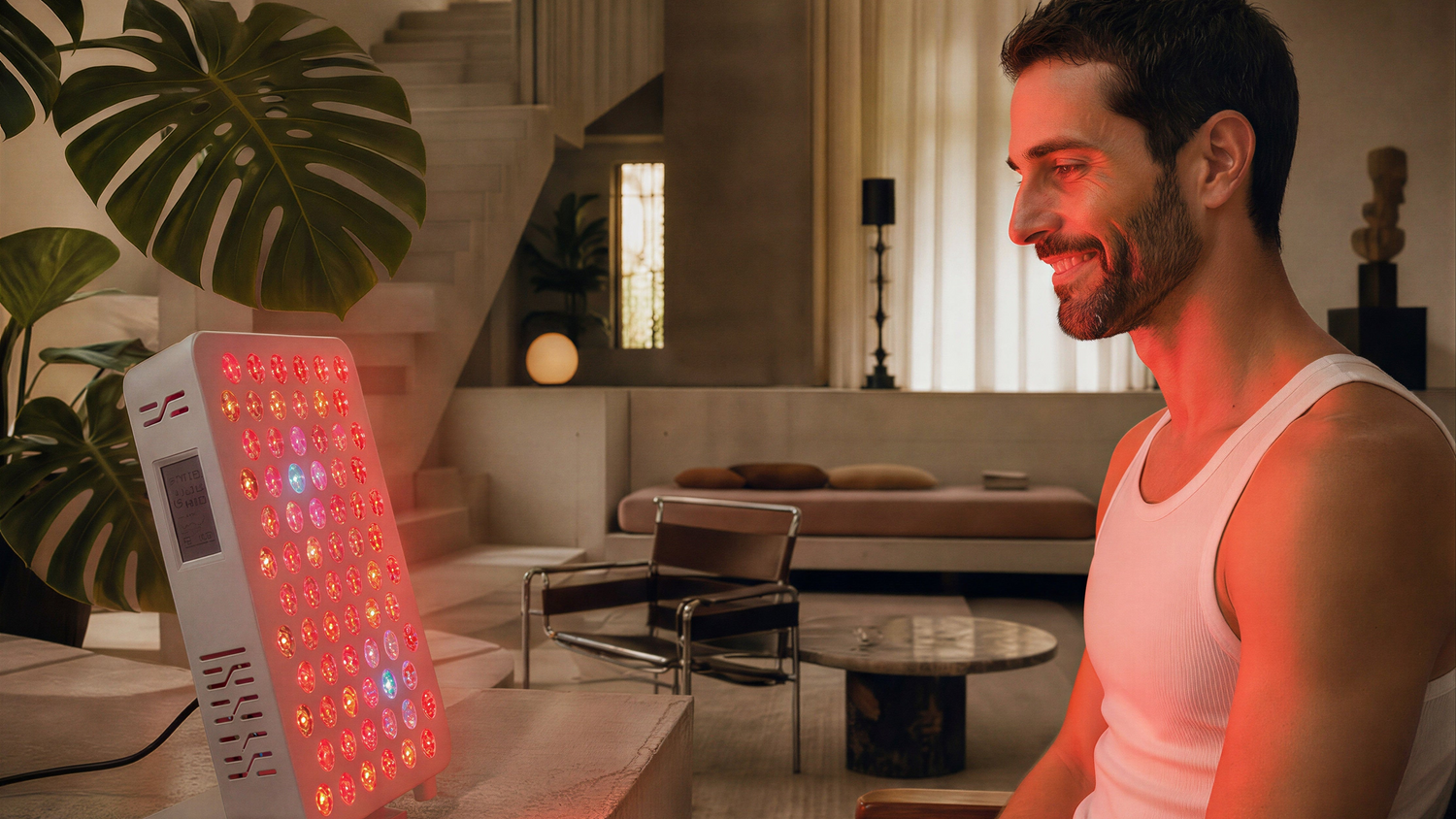
A red light therapy session should feel comfortable. Most people notice the brightness of the LEDs and, depending on the device, a gentle warmth. It should not feel painfully hot or cause burning.
Session length, distance and frequency depend on the device and its light output. More exposure is not automatically better, so always follow the manufacturer's instructions. Results can vary, but regular, correct use is generally more important than intensity.
A considered addition to your routine
Red light therapy offers a simple way to bring light-led wellness into the home. By delivering targeted red and near-infrared wavelengths, it is designed to work alongside the body's natural processes and complement a wider routine built around movement, recovery, rest and wellbeing.
It is not a quick fix. The greatest value comes from choosing a well-designed device, using it correctly and staying consistent over time.
If you have a medical condition, take photosensitising medication, are pregnant or have unusual sensitivity to light, consult a qualified healthcare professional before use. Always follow your device's safety guidance, including any recommendations for eye protection.